


A New Unique Collaboration
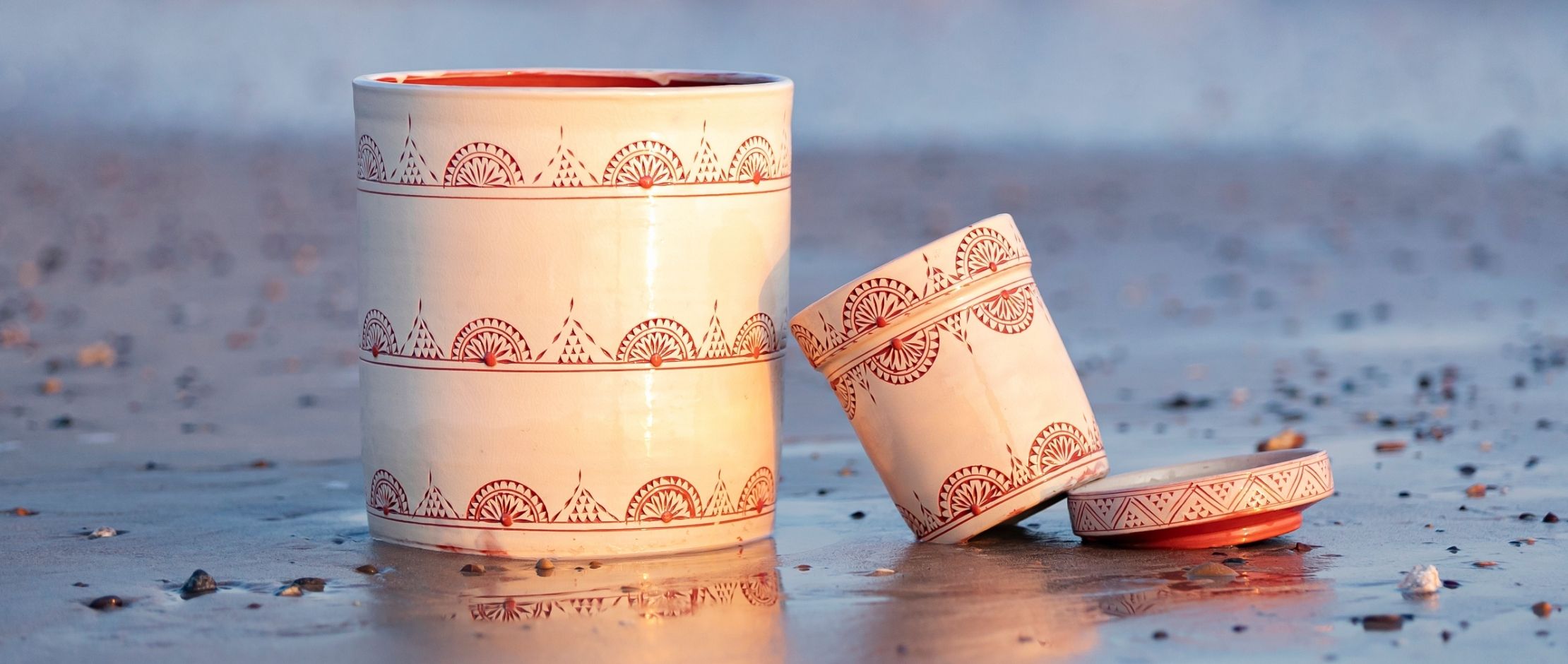
We explore, we travel, we traverse roads in search of emotions and treasures to share. And it is in Morocco that magic happens. Why? Because it is in the heart of its countryside that rare and authentic pieces come to life, and where the fabulous red clay ceramics are created. We love these ceramics for many reasons: the stories they tell, the quality of craftsmanship they demand, the natural materials used, but also their beauty, quite simply.
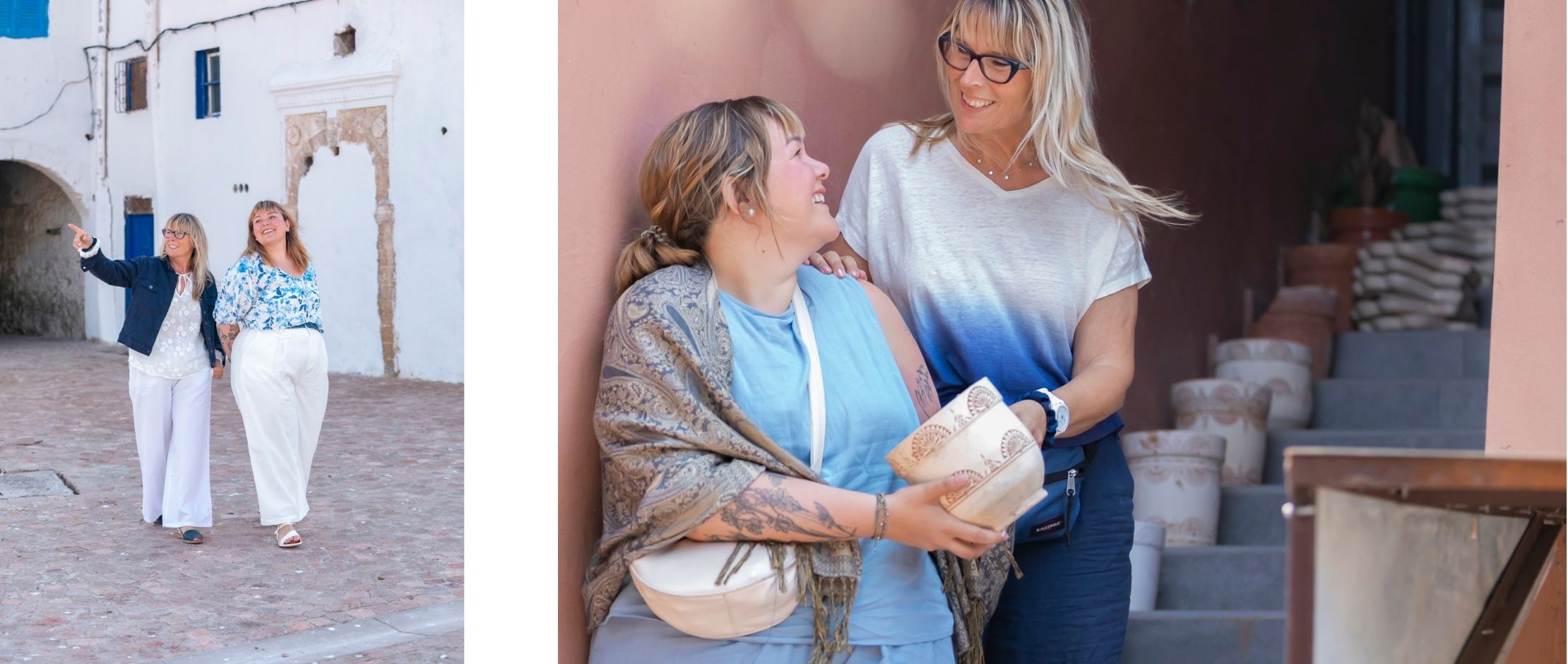
So, to find these gems, we search, we uncover. What we love above all: exchanging with the artisans, understanding their work, and making it known, because it is with them that everything begins.
The ceramic is their expression ground, born from their imagination: the choice of pottery, color, motif... all of this gives life to raw, unique, and splendid pieces whose story and emotion will remain engraved. Isn't that poetic? That's exactly what we love, and we love above all to tell you the story of these pottery pieces which, in our eyes, are the most beautiful in the world!
-min_EwlYFWs.jpg)
This year, Fleuriot reinvents itself and hopes to bring Oriental spirit to its shops. With the Asian competition, it is now difficult to find original, handmade, and ethical products. That's why we've imagined an innovative concept: decoration on the theme of Morocco. Our proximity to the artisans allows us to have control over the origin of our products, which are handmade in small workshops in Safi and Marrakech.
We went to Safi and met our suppliers of cachepots and plates.
In several regions of Morocco, the soil is clayey and rich in minerals. In addition to Moroccan artisanal know-how, the abundance of this raw material has propelled pottery manufacturing to a global level. The Moroccan artisan works according to an ancestral technique, with traditional tools and methods to produce tagines, vases, and decorative plates...
-min_saf6kMZ.jpg)
-min_wSKsHKn.jpg)
The raw material for making Moroccan pottery is clay. Three types of clays are used in this craft: red clay, yellow clay, and white clay. To prepare the paste, they are finely sieved and purified before use. The clay is placed in water tanks for a long period to remove stones and limestone attached. Then, it is exposed to the sun for long hours to dry.
Once the raw material is ready, the artisan starts kneading and shaping the dough. He places it in the center of his wheel, and with the help of his feet, he spins this wheel while his hands mold the dough using a little water and well-executed symmetrical movements. The object created is placed under the sun to dry before being placed in high-temperature kilns (between 900 and 1200 degrees).
-min_Im2Znrg.jpg)
What is "Zwak"?
We come to the final step, that of decoration, called "zwak" in Arabic. These are shapes and symbols inspired by Amazigh culture and Quranic verses. Artisans produce two types of objects: those that retain their raw and natural side and others with a more refined appearance. To have this shiny aspect, the object is coated with a thin layer of colors.
The Fleuriot x Morocco collection is defined in particular by bohemian and modern colors, as well as a nice selection of vases, cachepots, and baskets. Everything is hand-painted and has been selected directly from workshops in Safi, Morocco.
-min.jpg)
Handcrafted Baskets from Marrakech
We collaborate with two women-led cooperatives located near Marrakech, rooted in ancestral craftsmanship. Each basket is entirely handmade by women artisans using Doum palm fibers, carefully harvested and sun-dried in their village.
The weaving follows a traditional technique passed down through generations — a patient, meticulous process where each strand is coiled, knotted, and tightened to create a structure that is both flexible and strong. The shape gradually takes form in a spiral, from the base up to the handles, following the rhythm of skilled hands.
-min_Bz9Wka8.jpg)
-min_AmYgjIH.jpg)
Each basket takes about a week to complete, with every detail reflecting the personal touch of the woman who made it.
Each day, after taking their children to school, the women gather at the cooperative to weave according to the given dimensions. Some also choose to work from home, gaining autonomy and valuable financial stability.
A living craft, imbued with tradition, transmission, and dignity.
-min_6w1DB21.jpg)